Outdoor Living In Pflugerville

Pflugerville Outdoor Living Contractor - Patios, Decks, Patio Covers, Pergolas & Outdoor Kitchens

Most outdoor living projects in Pflugerville don’t fail because of bad design. They fail because the contractor underestimated what’s under the yard.
Capital Outdoor Spaces has been building patios, decks, patio covers, pergolas, outdoor kitchens, and hardscaping across Central Texas since 1986. Family-owned, A+ BBB rated, 3,500+ builds completed. John and Summer lead every project personally. That longevity isn’t accidental – it comes from learning, early in this market, that Black Gumbo clay doesn’t forgive shortcuts and that Pflugerville’s permit process punishes contractors who show up unprepared.
Both lessons shape how we plan every project before a shovel touches the ground.

What Black Gumbo Clay Actually Does to Outdoor Structures

Pflugerville sits on some of the most reactive soil in Central Texas. Black Gumbo clay expands when it absorbs water and contracts as it dries out – sometimes dramatically, across a single season. That movement doesn’t care what’s sitting on top of it.
We worked with a Pflugerville homeowner a few years back who had a covered patio poured by another contractor the previous spring. By autumn, the slab had cracked diagonally across the corner closest to the downspout. The concrete wasn’t defective. The mix was fine. The problem was that nobody had accounted for what a wet spring followed by a dry Central Texas summer does to clay at depth. The edge had no grade beam. The rebar was light. The slab had no real resistance to the ground moving beneath it.
Fixing it cost more than building it right would have.

Footing depth matched to the structure type and what the ground below it actually does

Heavy rebar grids in reinforced concrete work
Deep perimeter grade beams where slab edges need added resistance to clay movement
Engineered footing layouts for covers, decks, porches, and load-bearing structures
Drainage and runoff planning so water doesn’t pool and accelerate soil expansion near the structure
Texas 811 utility coordination before any excavation begins


If your Pflugerville yard has visible cracking, standing water, or uneven grades near the house, those are symptoms worth talking through before you choose a design.

Pflugerville's Permit Portal Rejects Unprepared Contractors Fast

Pflugerville uses the CityWorks Permit, License, and Land Management portal for project filing. The city requires vector or CAD plans. Hand-drawn plans are rejected at intake – not reviewed, not flagged for correction, just rejected – and that single requirement has delayed more than a few projects that were otherwise ready to build.
It’s worth understanding why the city runs it this way. Digital vector plans allow reviewers to check dimensions, setbacks, and utility conflicts programmatically. It’s more efficient for them. But it means a contractor who shows up with a PDF sketch or a hand-measured drawing is sending the homeowner back to square one before any work has started.
We prepare projects around the digital documentation requirement from day one:
Project ControlWhy It MattersOur ApproachCityWorks PLL filingIncomplete submissions delay approvalWe organise the project for online submissionVector or CAD plansHand-drawn plans are rejectedWe work from permit-ready digital formats2021 IRC complianceStructural work must meet adopted residential codeBuild scope aligned to the code path2020 NEC complianceOutdoor power requires proper protectionElectrical work planned around current outdoor safety standardsTexas 811 coordinationExcavation can conflict with buried utilitiesUtility marking coordinated before diggingETJ review pathSome properties need separate confirmationWe verify the review route before filing
Homeowners shouldn’t have to manage this process themselves. We own the coordination.

Concrete Patios That Hold Up Past the First Summer

There’s a version of a concrete patio that looks great in the contractor’s portfolio photo and starts showing stress fractures eighteen months later. In other parts of Central Texas, that might just be bad luck. In Pflugerville, it’s usually a predictable outcome of building a thin, lightly reinforced slab on top of soil that moves.
The fix isn’t complicated, but it does cost more upfront. Heavy rebar grids. Deep perimeter grade beams along the edges where clay movement exerts the most force. Slab thickness calibrated to how the space will be used – a patio that will hold a stone outdoor kitchen and a pergola load needs to be engineered differently than one that will hold patio furniture. Proper base preparation before the forms go in.
Basic FlatworkCapital Outdoor Spaces ApproachLight or no reinforcementHeavy rebar gridShallow edge supportDeep perimeter grade beam where neededGeneric slab thicknessThickness matched to use and soil behaviourMinimal site prepExcavation and base planning around clay movementNo utility pre-checkTexas 811 coordination before any digging
The difference shows up three to five years in, not on pour day.

Patio Covers and Pergolas: Three Problems to Solve Simultaneously

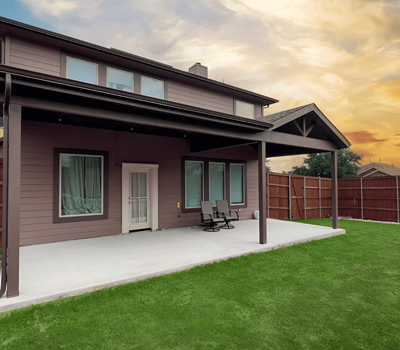
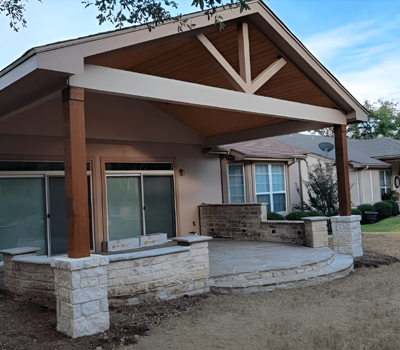
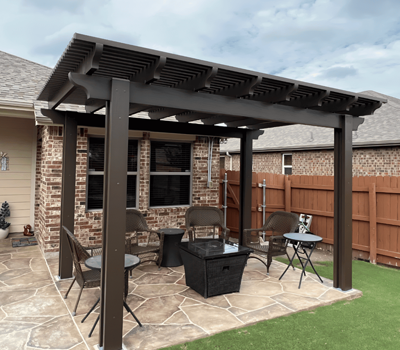
A patio cover or pergola in Pflugerville has to satisfy the structural load path, the zoning setback requirements, and the HOA architectural rules – all at the same time. Miss any one of them and either the structure isn’t safe, the permit doesn’t get issued, or the HOA sends a rejection letter after the homeowner has already invested in materials.
Zoning requires 5-foot interior side yard clearance. That’s tighter than it sounds when you’re working with a backyard that already has a fence line, a gate, and a couple of established trees eating into the buildable area. Sometimes the pergola footprint has to shift or shrink to stay legal.
HOA rules vary by community and can be surprisingly specific. Springbrook prohibits corrugated plastic and corrugated metal materials outright – which rules out some popular and inexpensive roofing options for covered pergolas. Falcon Pointe requires siding and trim paint matching for exterior additions, which affects finish decisions even when the homeowner isn’t planning to touch the house itself.
For every patio cover or pergola, we review:

Interior side yard clearance and buildable area

Attached vs. detached structure conditions and how that changes the permit path
HOA material restrictions and paint or trim matching requirements
Roofline relationship to the home’s existing profile
Load path from beams to posts to footings
Footing design for clay movement at that specific site
Utility conflicts before excavation


If you’re in Springbrook, Falcon Pointe, or another Pflugerville HOA community, bring your architectural covenants to the first consultation. It saves a revision cycle later.

Decks and Porches: The Details That Determine the Permit Path

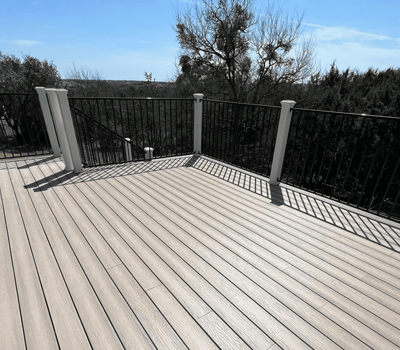
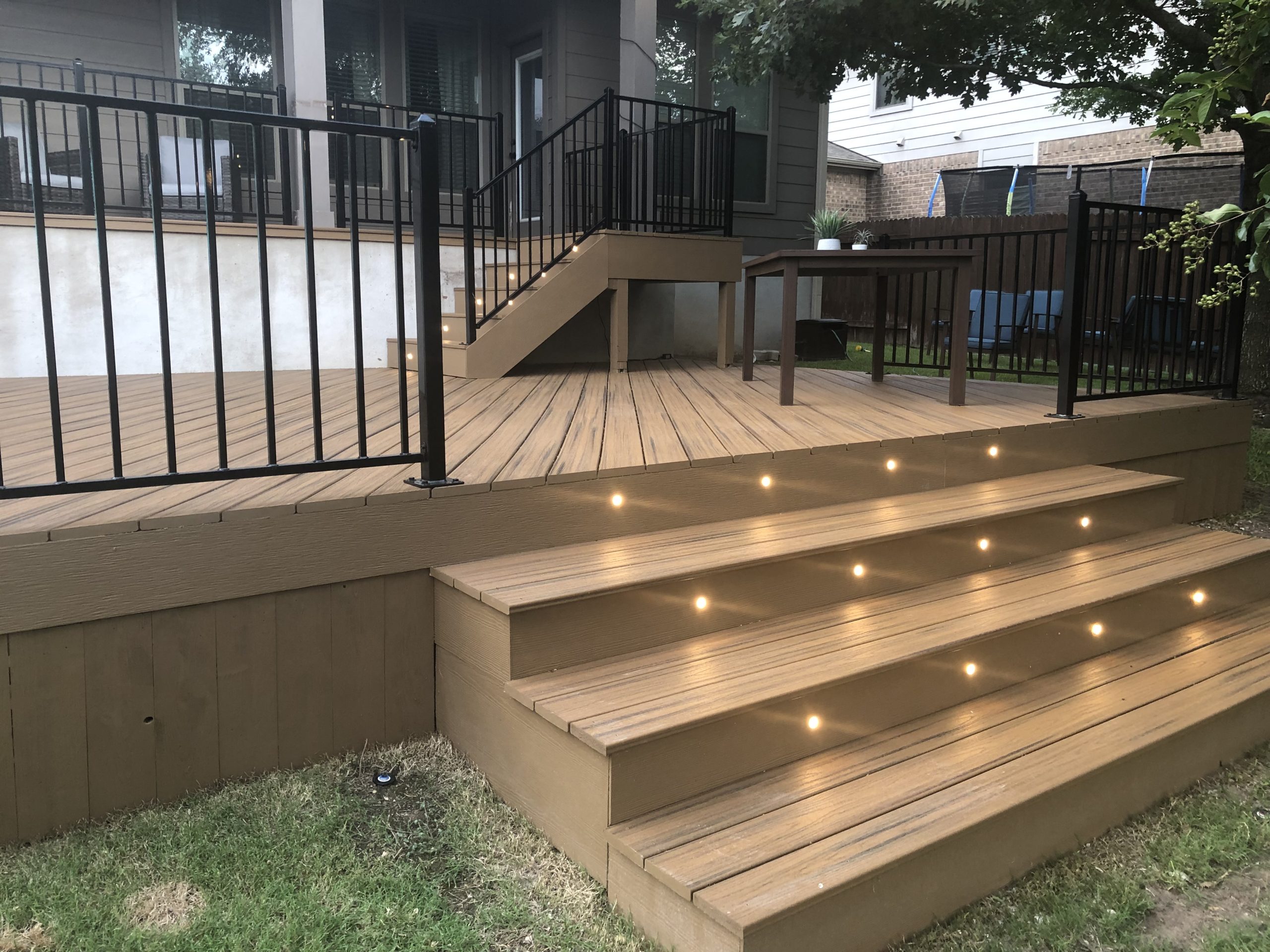
Pflugerville permits are required for any attached deck and for any deck floor sitting 30 inches or more above grade. The height threshold is more consequential than it seems, because an elevated deck requires documentation that a low platform deck doesn’t – more structural planning, inspection coordination, guardrail specifications, and footing engineering.
The inspection window creates its own pressure. Pflugerville inspections run from 12:00 PM to 4:00 PM only. A missed inspection costs $200 and loses a day of build momentum. It’s the kind of administrative detail that frustrates homeowners who had no reason to know it existed.
ConditionRiskOur ResponseAttached structurePermit requiredFiled through the correct path from the startDeck floor 30″+ above gradePermit requiredStructure, footing, railing, and inspection planned earlyBlack Gumbo clay movementFooting stress and settlementEngineered support around soil behaviourAfternoon-only inspectionsMissed inspection riskCrews coordinated to the 12:00-4:00 PM windowMissed inspection$200 feeProject managers own the scheduling
Capital Outdoor Spaces project managers coordinate crew readiness around that window. The job doesn’t stall because nobody checked the inspection calendar.

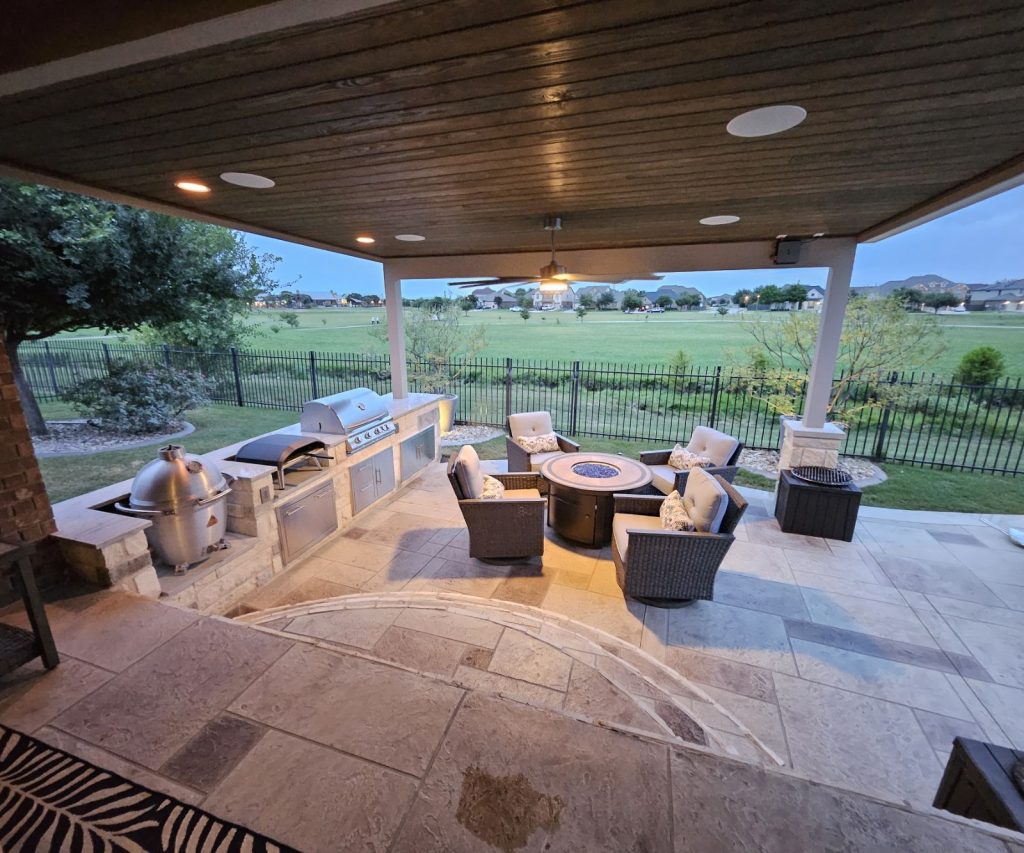
Outdoor Kitchens: Where Lifestyle Meets the 2020 Electrical Code

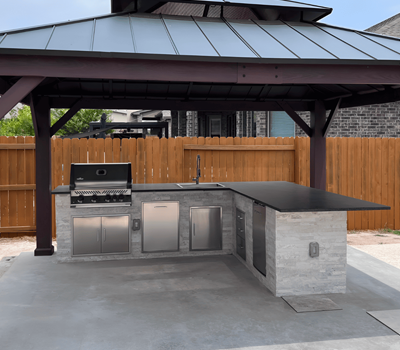
An outdoor kitchen is where the complexity of an outdoor living project peaks. You’re combining structure, weather exposure, electrical circuits, appliance loads, plumbing adjacency, and daily human contact in a single outdoor environment. When any part of that planning is loose, the problems don’t show up during the build – they show up during the inspection, or worse, after the homeowner has been using the space for six months.
Pflugerville has adopted the 2020 National Electrical Code. Outdoor kitchen circuits need full GFCI protection and dedicated grounding systems. That’s not optional – it’s what separates a compliant outdoor kitchen from one that fails inspection or, more seriously, creates a shock hazard in a wet environment.

Full GFCI protection for all outdoor circuits

Dedicated grounding throughout the outdoor electrical system
Electrical scope coordinated with the permit filing before construction starts
Weather-aware placement of powered features and appliances
Appliance layout tied to how the space will actually be used
Texas 811 coordination before any trenching or excavation
CityWorks PLL documentation matched to the correct project scope


The finished space should handle Central Texas weather, pass review without rework, and function well for daily cooking use. We design toward all three.

ETJ Properties: Don't Assume the Standard Approval Path Applies

Some Pflugerville-area properties sit inside the Extra-Territorial Jurisdiction. The ETJ is one of those planning realities that catches homeowners off guard – same zip code, same neighbourhood feel, but a different administrative review path for permits and utility coordination.
The mistake is assuming every Pflugerville address works the same way. We’ve seen projects start down one approval path and need to be restructured mid-process because nobody confirmed ETJ status at the outset. That kind of correction is expensive and demoralising after weeks of planning.
We check the review route early – before drawings are finished or anything enters the portal. For ETJ and edge-area properties, that means confirming property location, applicable review authority, utility marking requirements, HOA covenants, and plan format expectations before the project has any momentum built around the wrong assumption.
If your property is near Pflugerville’s city limits, it’s worth one early check to confirm which path the project should follow.

HOA-Aware Design for Pflugerville Neighbourhoods

HOA approval in Pflugerville isn’t a formality. It’s a real checkpoint that can redirect a project after the homeowner has already committed to a design direction. Material choice, colour matching, roof form, structure placement, trim finish – all of it can fall under architectural review, and a rejection sends the project back to the design stage at the homeowner’s cost.
Springbrook’s ban on corrugated materials matters practically. It rules out some of the most commonly specified roofing options for pergola covers and patio additions, which means the design conversation has to start from a compliant material list rather than work backwards from a prohibited one. Falcon Pointe’s paint-matching requirement is subtler but equally binding – getting the trim colour wrong on a new patio cover can trigger a revision request even when the structure itself is well-built.
We align materials, finish direction, structure placement, and documentation before the design reaches HOA review. Send your architectural covenants before the consultation and we’ll use them to shape the project rather than react to them later.

Pflugerville Outdoor Living Services

ServicePlanning FactorsCustom decksPermit triggers, height thresholds, footing depth, clay movementCovered patiosCityWorks filing, reinforced concrete, utility coordinationPatio coversSetbacks, HOA material rules, load path, footing designPergolasHOA restrictions, setback clearance, exemption confirmationOutdoor kitchens2020 NEC compliance, GFCI protection, appliance coordinationHardscapingSoil movement, drainage behaviour, Texas 811 coordination

Why Pflugerville Homeowners Choose Capital Outdoor Spaces

Pflugerville rewards contractors who’ve done the homework. Black Gumbo clay, the CityWorks portal, afternoon-only inspections, community-specific HOA rules, ETJ review paths – none of these are things you learn by reading about them. They’re things you learn by building here, making mistakes early, and adjusting how you plan.
Capital Outdoor Spaces has been adjusting since 1986.

Family-owned since 1986, led by John and Summer

37+ years of Central Texas outdoor living experience
3,500+ completed builds
A+ BBB rating
CityWorks PLL filing support with vector/CAD plan readiness
2021 IRC and 2020 NEC project planning
Texas 811 utility coordination before excavation
Black Gumbo clay footing and concrete engineering
HOA-aware design for Springbrook, Falcon Pointe, and other Pflugerville communities
ETJ review path confirmation for edge-area properties

Pflugerville Outdoor Living FAQs

If it’s attached to the home, yes – regardless of height. If the deck floor sits 30 inches or more above grade, yes, even if it’s detached. We review height, attachment condition, footing plan, and railing needs before anything gets filed. What materials are banned in Pflugerville HOA communities? Springbrook prohibits corrugated plastic and corrugated metal. Falcon Pointe requires siding and trim paint matching for exterior additions. We review your specific architectural covenants before recommending materials, roof forms, or finish details.
Detached structures under 200 square feet may qualify for an accessory structure exemption, depending on project conditions and the property’s review path. That exemption doesn’t override setbacks, HOA rules, utility conflicts, or electrical requirements. We confirm size, placement, attachment status, and approval route before treating any structure as exempt.
The clay expands when wet and contracts when dry. Lightly reinforced slabs without proper edge support can’t resist that movement from below. We use heavy rebar grids, deep perimeter grade beams where needed, and Texas 811 utility coordination before digging to build slabs that hold up through the seasonal cycle.
The CityWorks PLL portal requires vector or CAD plans. Hand-drawn submissions are rejected at intake. We prepare projects in the correct digital format so the filing package doesn’t get stopped before review even begins. What electrical code applies to Pflugerville outdoor kitchens? Pflugerville follows the 2020 National Electrical Code. Outdoor kitchen circuits require full GFCI protection and dedicated grounding systems. We plan electrical scope, appliance layout, weather exposure, and inspection needs before construction begins.
The missed inspection fee is $200, and it costs a day of build progress. Pflugerville inspections run 12:00 PM to 4:00 PM only. Our project managers schedule crews around that window so it doesn’t happen.
Yes. We review property location, applicable review authority, utility coordination requirements, HOA covenants, project scope, and plan format expectations before filing. That early check keeps the project from building momentum in the wrong direction.
Scroll to Top